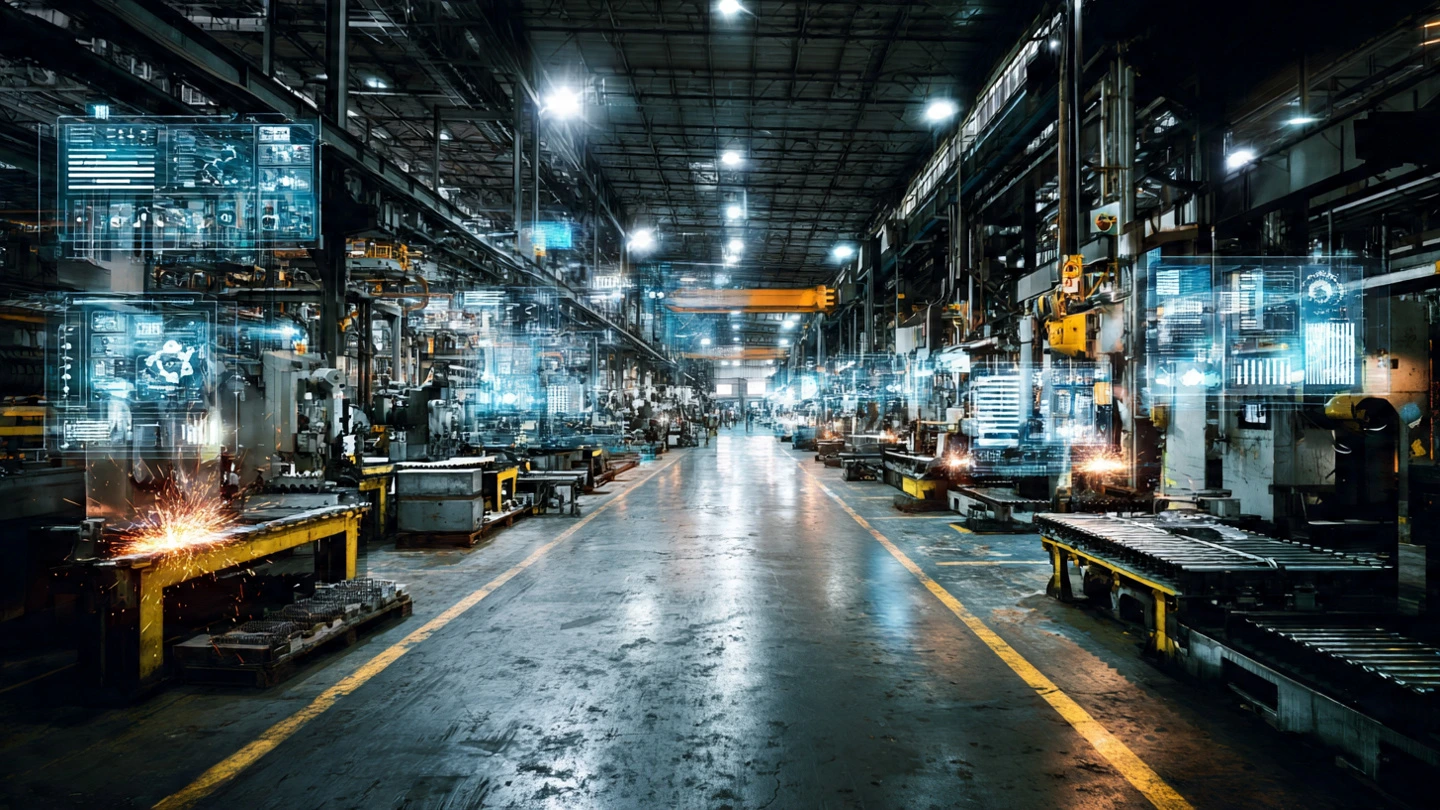
Constructing Visual Inspection Systems for Tough Industrial Conditions
Visual inspection systems in today’s manufacturing and heavy industries are the quiet guardians of quality and safety. From identifying micro-defects in metal parts to observing conveyor lines in real time, these systems guarantee reliability and consistency — even in the toughest conditions.
But creating an AI-based visual inspection system for rough industrial environments—where there’s dust, vibration, extreme temperatures, or poor lighting—is not easy at all. It takes a combination of sturdy hardware, intelligent algorithms, and wise integration.
1. The Role of Visual Inspection in Industry
Visual inspection systems are revolutionizing businesses like automotive, aerospace, steel, and oil & gas by taking over what people used to do manually—watch, detect, and evaluate.
Why It Matters
- Greater accuracy than manual inspection
- Ongoing monitoring with no downtime.
- Early detection of defects that minimize expensive rework or recall.
- Improved worker safety through lower exposure to hostile environments.
2. Challenges of Harsh Industrial Environments
| Environmental Challenge | Impact on System | Required Solution |
| High temperature or humidity | Sensor malfunction, image distortion | Use industrial-grade cameras with thermal protection |
| Dust, oil, or debris | Lens obstruction | Install air purging systems or protective enclosures |
| Vibration and noise | Misaligned imaging, data loss | Shock-absorbent mounting and real-time stabilization |
| Poor or changing lighting | Inaccurate detection | Adaptive illumination and HDR cameras |
| Electromagnetic interference | Signal disruption | Shielded cables and optical isolation |
3. Essential Elements of a Resilient Visual Inspection System
1. Ruggedized Hardware
Utilize industrial-quality cameras and cases durable enough for IP65/IP67 environments.
Use temperature-resistant sensors for high-heat applications.
Include anti-vibration mounts to keep imaging stable.
2. Smart Illumination Control
Implement adaptive LED lighting that adapts to ambient light.
Utilize infrared (IR) or ultraviolet (UV) illumination for surfaces not visible to the human eye.
3. AI-Fueled Computer Vision
Utilize deep learning patterns and defect classification models.
Process images locally with edge AI devices to minimize latency and bandwidth.
Retrain models in real-time using production data.
4. Industrial IoT Integration
Integrate inspection systems with PLCs, SCADA, and MES for immediate decision-making.
Initiate automatic responses (e.g., stopping a production line or marking parts) in real-time.
4. Workflow for Implementation
| Stage | Process | Outcome |
| Problem Definition | Identify target defects, tolerances, and environment | Clear scope and measurable KPIs |
| Data Collection | Capture varied defect and non-defect samples | Diverse dataset for model training |
| Model Training | Use CNNs or transformer-based vision models | Accurate defect classification |
| System Integration | Connect vision system to line controls | Seamless automation |
| Testing & Calibration | Test under real environmental stress | Reliability and accuracy validation |
| Continuous Monitoring | Log performance metrics and errors | Predictive maintenance and optimization |
5. Results and Benefits
| Focus Area | Result Achieved |
| Quality Control | Up to 98% defect detection accuracy |
| Efficiency | 24/7 inspection with no fatigue |
| Cost Reduction | Lower rework and scrap costs |
| Safety | Reduced human involvement in risky zones |
| Scalability | Modular systems can expand across production lines |
Outcome Summary:
A properly constructed visual inspection system revolutionizes industrial operations from reactive to proactive — detecting problems before they become failures.
6. Success Essentials
- Spend money on rugged, robust hardware—bargain components will not last industrial wear and tear.
- Create a feedback loop for ongoing model refinement.
- Provide consistent lighting—vision errors result from inadequate illumination in half of all cases.
- Plan for modularity and scale-out from day one.
- Integrate with legacy control systems for real-time reaction.
Conclusion
It’s creating a visual inspection system in brutal industrial conditions about engineering smarts into toughness. It’s not merely AI and cameras—it’s tough design, real-time intelligence, and profound domain savvy.