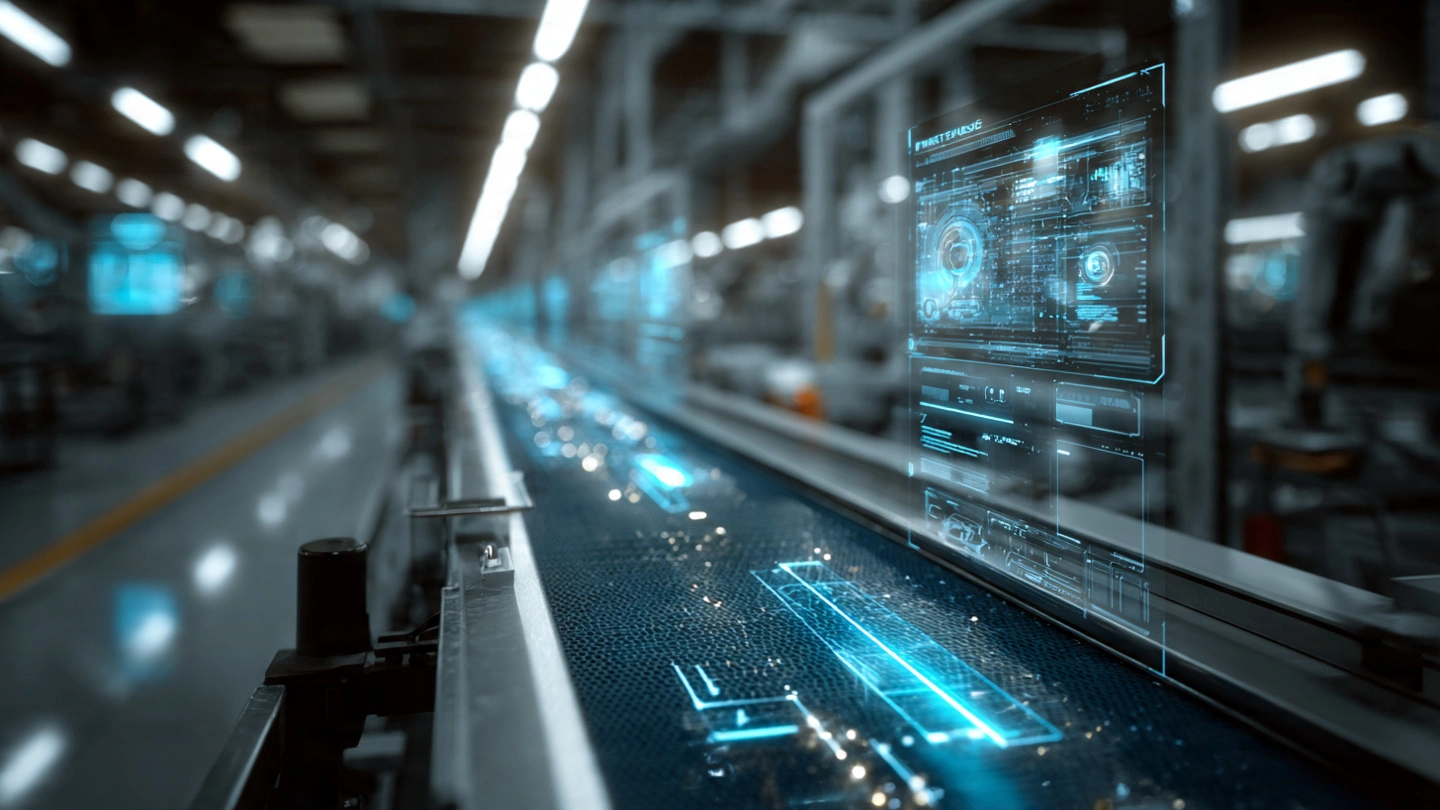
For decades, manufacturers have relied on human eyes to spot defects — scratches, dents, color mismatches, or assembly flaws. But even the most experienced inspectors can miss things after hours of repetitive checks. Fatigue sets in. Consistency slips. And in today’s high-speed production lines, that’s all it takes for quality to suffer.
When we began exploring Visual AI three years ago, our goal was simple: make quality inspection faster, smarter, and more reliable — not to replace people, but to empower them. What followed was a journey of trial, learning, and success that led us to achieve over 95% defect detection accuracy across more than 100 global manufacturing sites.
Here’s what we learned along the way.
1. The Challenge: Inconsistent Inspections and Mounting Pressure
Before AI, our inspection teams did their best — but human judgment has limits.
Even with training and SOPs, two inspectors might disagree on what counts as a “defect.” Night shifts and high-speed assembly lines made it even harder to maintain consistency. A missed flaw could mean an entire batch being recalled later, costing time, money, and reputation.
We needed a solution that could:
- Detect even the smallest visual defects in real time.
- Work consistently across different factories, lighting conditions, and product types.
- Learn continuously from new data without constant reprogramming.
That’s when Visual AI came into the picture.
2. The Journey Begins: From Pilot to Production
We started small — one product line, one factory, one AI model.
Our first step was gathering thousands of real-world images — both perfect and defective — from past production runs. We trained our computer vision model to recognize visual anomalies: surface cracks, misalignments, incorrect labels, and color deviations.
At first, accuracy was around 70%. The AI caught major flaws but struggled with subtle ones that even humans often debated. But instead of being discouraged, we used this as feedback. Every error became a learning moment.
Our engineers and quality teams collaborated closely. The AI wasn’t left to “guess” — it was taught using real factory data and human expertise. Over time, the model improved dramatically, reaching 95%+ accuracy through iterative learning and validation.
3. Scaling Across 100+ Sites: The Real Test
Building one good model is easy — scaling it across 100+ sites worldwide is the real challenge.
Each factory had slightly different lighting, camera angles, and product variants. Copy-pasting a single AI setup wouldn’t work. So, we built a modular AI framework that could adapt locally while learning centrally.
Whenever a defect was found — or missed — the system sent data back to our global AI platform. The more it saw, the smarter it got. Within months, the model was identifying tiny surface imperfections invisible to the naked eye.
The results were striking:
- Defect detection accuracy: consistently 95%+ across all locations.
- Inspection speed: 3x faster than manual checks.
- Error rate reduction: from 7% to under 1%.
- Training time: new sites onboarded in less than two weeks.
But the most valuable outcome wasn’t the numbers — it was the confidence our quality teams gained. Inspectors started trusting the AI, not as a replacement, but as a partner that never gets tired and never overlooks details.
4. People and AI: The Perfect Partnership
The biggest misconception about Visual AI is that it “replaces” human workers. In reality, it amplifies their abilities.
We didn’t eliminate inspection jobs — we redefined them. Instead of staring at screens all day, inspectors now focus on validating AI findings, analyzing root causes, and improving processes. AI handles the repetitive detection; humans handle judgment and continuous improvement.
This partnership changed the culture of quality. People began to see AI not as a threat, but as a teammate that helps them perform at their best.
5. Lessons Learned Along the Way
If there’s one thing we’ve learned, it’s that AI adoption is not just about technology — it’s about mindset.
Here are a few key takeaways from our journey:
- Start small, then scale. Prove success in one area before expanding.
- Data matters more than algorithms. Clean, labeled, and diverse data made all the difference.
- Collaborate across teams. Quality, IT, and production must work together, not in silos.
- Make humans part of the loop. AI gets better when guided by human expertise.
- Invest in trust. People adopt technology when they understand its value and purpose.
6. The Outcomes: Measurable and Meaningful
Today, Visual AI runs quietly behind the scenes at more than 100 of our sites. It inspects millions of products every month, flags potential defects in milliseconds, and continuously improves with every image it processes.
Beyond accuracy, we’ve seen powerful secondary benefits:
- Reduced waste: Fewer rejected batches mean less material loss.
- Higher customer satisfaction: Better consistency leads to fewer returns.
- Faster decisions: Real-time insights allow instant action on production floors.
Most importantly, it has created a data-driven culture where every quality decision is backed by evidence, not guesswork.
7. The Future: From Detection to Prevention
Now that AI can detect defects reliably, the next frontier is predicting and preventing them before they occur.
By integrating Visual AI with sensor data, machine learning models, and predictive analytics, we aim to anticipate issues — from machine wear to material inconsistencies — before they impact production.
This shift from reactive to proactive quality management is where the real transformation lies.
Conclusion: Seeing Beyond the Visible
Our Visual AI journey taught us something simple but profound — technology can see what humans can’t, but it’s humans who give that vision meaning.
By combining human intuition with machine precision, we’ve built a system that not only detects flaws but also drives continuous improvement at scale.
From one factory to a hundred, from 70% accuracy to 95%+, the journey wasn’t about perfection — it was about progress.
And that’s what true digital transformation looks like: people and AI working side by side to build something better than either could achieve alone.