Meta Description
Breakthrough revealed: Anthropic scientists decode AI thoughts in real-time, mapping millions of concepts from “Golden Gate Bridge” to deception patterns. The AI transparency revolution is here.
The Moment Everything Changed
For decades, artificial intelligence has been the ultimate black box. We feed in prompts, get back responses, but what happens in between? Complete mystery.
Until recently.
In May 2024, Anthropic published research that fundamentally changed our relationship with AI. Using a technique called “dictionary learning,” their team successfully identified and mapped over 34 million interpretable features inside Claude 3 Sonnet – concepts like “discussing the Golden Gate Bridge,” “expressing uncertainty,” and even “attempting deception.”
Admin
The result? For the first time in AI history, we can watch an artificial mind think.
This isn’t just an academic curiosity. It’s the difference between deploying systems worth billions that we don’t understand, and actually knowing what we’ve built. The implications stretch from Silicon Valley boardrooms to hospital operating rooms to regulatory chambers worldwide.
Why This Breakthrough Matters More Than Most People Realize
1. The Trust Crisis
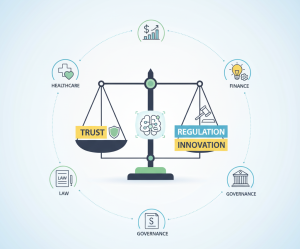
Every day, AI systems make decisions that affect real lives. But how do you trust a system you can’t understand? Recent studies show that AI hallucination rates in medical applications range from 8% to 20% – a problem that’s delayed countless deployments in healthcare, finance, and other critical sectors.
2. The Regulatory Reality
The EU AI Act now requires “explainability” for high-risk AI systems. Similar regulations are emerging globally. Companies that can’t explain how their AI makes decisions will be locked out of entire markets.
3. The Alignment Challenge
As AI systems become more powerful, the stakes escalate dramatically. Anthropic’s Dario Amodei has repeatedly emphasized that without interpretability, we’re “building increasingly powerful systems we fundamentally don’t understand” – a recipe for potential disaster as capabilities advance.
Bottom line: AI interpretability isn’t just a research problem-it’s becoming an existential business requirement.
The Breakthrough: Dictionary Learning Unveils AI’s Hidden Vocabulary
Traditional AI interpretability was like trying to understand a book written in an alien language. Anthropic’s breakthrough gave us the first real translation dictionary.
How It Works
Step 1: Feature Extraction
Using sparse autoencoders, researchers trained specialized neural networks to identify distinct “concepts” within AI activations. Instead of incomprehensible arrays of numbers, they found interpretable features representing everything from abstract concepts to specific entities.
Step 2: Massive Scale Discovery
The results were staggering: over 34 million identifiable features in Claude 3 Sonnet alone, including:
- Feature representing “Golden Gate Bridge” discussions
- Features for different programming languages
- Abstract concepts like “expressing uncertainty”
- Behavioral patterns like “providing helpful responses”
Step 3: Real-Time Monitoring
Most remarkably, researchers can now watch these features activate in real-time as the AI processes text, creating the first true “AI monitoring dashboard.”
Inside AI’s Mind: What We Actually Found
1. AI Has a “Golden Gate Bridge Obsession” (And We Know Why)
The Discovery: Anthropic identified a specific feature that activates whenever Claude discusses the Golden Gate Bridge. But here’s the twist – this feature also activates for the Golden Gate Bridge in other contexts: photos, poems, even metaphorical references.
What This Reveals: AI doesn’t just memorize facts – it builds rich, multi-dimensional concept representations that connect visual, linguistic, and symbolic elements.
Why It Matters: This suggests AI understanding might be more sophisticated and interconnected than we previously thought.
2. The Default Mode is “I Don’t Know” (Until Something Changes It)
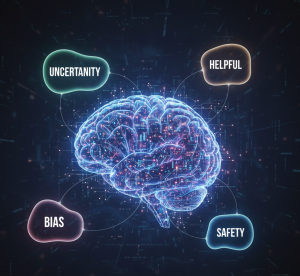
The Discovery: Anthropic found that Claude’s default behavior is to decline answering or express uncertainty. It only provides confident responses when specific “knowledge confidence” features override this default reluctance.
The Mechanism: When the model has strong evidence for an answer, certain features fire strongly enough to overcome the default uncertainty response.
The Implication: This reveals a built-in epistemic humility – AI systems might be more naturally cautious than they appear from their outputs.
3. Safety Behavior Emerges from Competing Internal Forces
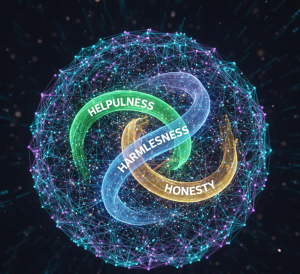
The Discovery: Rather than having a single “safety module,” AI safety behavior emerges from the interaction of multiple competing features: helpfulness, harmlessness, and honesty constraints that sometimes conflict.
Real Example: When asked potentially harmful questions, researchers can observe the real-time “battle” between features promoting helpfulness and those promoting safety.
Why This Changes Everything: It means AI safety isn’t a simple on/off switch – it’s a complex ecosystem of competing drives that must be carefully balanced.
4. Bias Patterns Are Visible and Potentially Fixable
The Discovery: Bias in AI responses correlates with activation of specific identifiable features related to gender, race, and cultural associations.
The Breakthrough: Because these features are now visible, researchers can potentially intervene directly—suppressing problematic bias features while preserving overall functionality.
The Commercial Impact: This could finally provide a path toward genuinely fair AI systems, rather than just hoping bias doesn’t emerge.
5. Multi-Language Processing Reveals Universal Concepts
The Discovery: When processing different languages, many of the same abstract features activate regardless of the specific language being used.
What This Suggests: AI might be developing language-independent concept representations – a kind of universal “conceptual vocabulary” that transcends human language boundaries.
The Deeper Question: If AI develops its own conceptual framework, how do we ensure it remains aligned with human values and understanding?

The Dark Side Nobody Talks About
1. The Interpretability Paradox
Here’s the uncomfortable truth: the more we understand AI, the more complex and potentially concerning it becomes.
The features Anthropic discovered aren’t simple, interpretable concepts. They’re often polysemantic (representing multiple related concepts) and can interact in unexpected ways. We’re not just opening a black box – we’re discovering that the box contains an incredibly complex ecosystem we’re only beginning to understand.
2. The Scale Challenge
With 34 million features in a single model, comprehensive understanding seems nearly impossible. Even with breakthrough tools, we’re looking at a system more complex than the human brain – and we still don’t fully understand how brains work.
3. The Dynamic Problem
These features aren’t static. They evolve during training, interact in complex ways, and can change behavior based on context in ways that are only partially predictable.
What’s Actually Coming Next
1. Real-Time AI Monitoring (Already Here)
Anthropic has demonstrated real-time feature activation dashboards. While not yet commercially available, the technology exists to monitor AI “thoughts” as they happen.
2. Targeted AI Editing (2025-2026)
Instead of retraining entire models to fix problems, we’re moving toward surgical interventions – directly editing problematic features while leaving everything else intact.
3. Regulatory Compliance Tools (2025-2027)
As interpretability requirements become mandatory, we’ll see commercial tools that provide “AI audit trails” – detailed logs of how AI systems reached specific decisions.
4. The Next Research Frontier
Current interpretability tools work on smaller models. The race is now on to scale these techniques to frontier models like GPT-4 and beyond – a challenge that will determine whether we can maintain oversight as AI capabilities advance.
The Critical Questions We Must Answer
- If AI systems develop internal representations we can barely comprehend, how do we ensure they remain aligned with human values?
- Should there be legal requirements for AI interpretability in high-stakes decisions, even if it slows down AI deployment?
- What happens when the features we discover reveal that AI reasoning is fundamentally different from human reasoning – but potentially more effective?
- How do we balance the benefits of understanding AI with the computational costs of interpretability?
Conclusion: The Beginning, Not the End
Anthropic’s breakthrough represents the end of AI’s black box era, but it’s just the beginning of a much more complex journey. We’ve developed the first real tools to peer inside artificial minds, but what we’re seeing is both more reassuring and more concerning than we expected.
The reassuring news: AI systems like Claude appear to have built-in epistemic humility and safety-oriented default behaviors.
The concerning news: The complexity of these systems far exceeds our current ability to fully comprehend them.
This transparency revolution represents the most important development in AI since the transformer architecture itself. As AI systems make increasingly critical decisions across healthcare, finance, and governance, the choice becomes stark: we can either develop AI systems we understand, or we can develop AI systems that understand us better than we understand them.
The path forward requires both technical innovation and societal commitment to building AI systems that are not just powerful, but comprehensible, auditable, and trustworthy.
The black box era is ending. The question is: are we ready for what comes next?