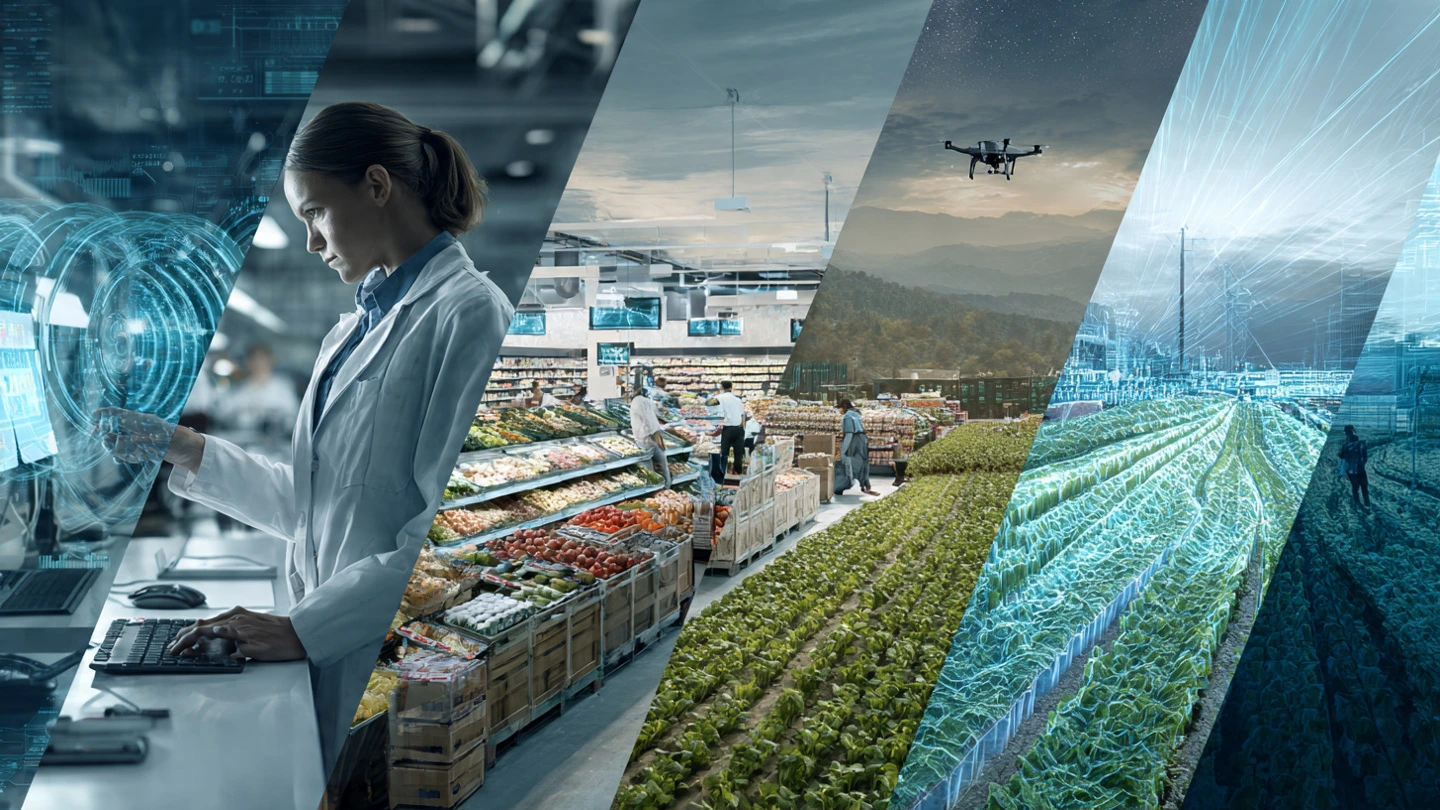
Introduction: The Expanding World of Computer Vision
When most people hear about computer vision, they think of robots in factories inspecting products on assembly lines. While manufacturing was indeed where this technology first proved its worth, we’re now witnessing something remarkable—computer vision is breaking free from the factory floor and transforming industries we interact with every single day.
Think about it: every time you unlock your phone with your face, browse products online, or visit a hospital, there’s a good chance computer vision is working behind the scenes. This technology, which essentially teaches computers to “see” and understand images just like humans do, has become so sophisticated and accessible that it’s revolutionizing everything from how doctors diagnose diseases to how we shop for groceries.
What makes this moment so exciting isn’t just the technology itself—it’s what we’re doing with it. We’re solving real human problems, making services more accessible, and creating experiences that seemed impossible just a few years ago. Let’s explore how computer vision is making a genuine difference across industries that touch our daily lives.
Transforming Healthcare: Saving Lives Through Better Vision
Healthcare might be where computer vision is having its most profound impact. We’re not talking about replacing doctors—far from it. Instead, this technology is becoming an invaluable assistant that helps medical professionals catch things the human eye might miss and make decisions faster when every second counts.
Medical Imaging and Diagnosis
Radiologists spend years training their eyes to spot abnormalities in X-rays, MRIs, and CT scans. Now, computer vision systems trained on millions of images can analyze these scans in seconds, flagging potential concerns for the doctor to review. In some studies, these AI systems have matched or even exceeded human accuracy in detecting certain cancers, particularly in mammography and lung imaging.
But here’s what’s really powerful: it’s not about replacing the radiologist’s expertise. Instead, think of it as giving every doctor access to a second opinion that never gets tired, never overlooks a detail, and has “seen” more cases than any single human possibly could. A radiologist in a small rural hospital now has access to the same level of analytical support as one in a major research center.
Early Disease Detection
Computer vision is becoming remarkably good at spotting the subtle early warning signs of diseases. Diabetic retinopathy, a leading cause of blindness, shows up as tiny changes in the blood vessels of the eye—changes so small they’re easy to miss in routine screenings. Computer vision systems can now detect these changes years before they become serious, giving patients a fighting chance to prevent vision loss through early treatment.
Similar breakthroughs are happening with skin cancer detection. Dermatologists are using computer vision apps that analyze photos of suspicious moles and lesions, helping them decide which ones need urgent attention and which are likely harmless. This doesn’t just improve accuracy—it makes expert-level screening accessible to people who might not have easy access to a dermatologist.
Surgical Assistance and Training
In the operating room, computer vision systems are helping surgeons navigate complex procedures with unprecedented precision. These systems can overlay crucial information—like the location of blood vessels or tumors—directly onto the surgeon’s view, essentially giving them X-ray vision during surgery. They can also track surgical instruments in real-time and alert the team if something seems amiss.
For training new surgeons, computer vision is creating opportunities that were previously impossible. Medical students can practice procedures in virtual reality environments where computer vision tracks their every move, providing instant feedback on their technique. It’s like having a master surgeon looking over your shoulder, guiding your hand, but without the pressure of a real patient on the table.
Patient Monitoring and Care
Hospitals are beginning to use computer vision to monitor patients continuously without invasive equipment. Cameras can track vital signs like breathing rate and detect falls or unusual movements, alerting nurses when intervention is needed. For elderly patients at home, similar systems can provide peace of mind to families while preserving the patient’s dignity and independence.
Revolutionizing Retail: Creating Smarter Shopping Experiences
Walk into a modern retail store, and you might not notice the quiet revolution happening around you. Computer vision is reimagining what shopping can be—making it more convenient, personalized, and efficient for both customers and retailers.
Checkout-Free Shopping
Amazon Go stores showed us the future: you walk in, grab what you need, and simply walk out. No lines, no scanning, no checkout. Computer vision cameras track what you pick up and automatically charges your account. While this might sound like science fiction, the technology is becoming increasingly practical and affordable for retailers of all sizes.
But it’s not just about convenience. These systems reduce labor costs, virtually eliminate theft, and provide retailers with incredibly detailed insights into shopping patterns. They can see which products customers pick up and put back, how long they spend in each aisle, and what factors influence their purchasing decisions.
Inventory Management
Running out of a popular item or not noticing misplaced products used to require armies of staff walking the aisles with clipboards. Now, computer vision systems using cameras or even robots can continuously monitor shelves, instantly flagging when something needs restocking or when products are in the wrong location.
This isn’t just about efficiency—it directly impacts customer satisfaction. Nobody enjoys finding empty shelves where their favorite product should be. Computer vision helps ensure that the right products are always in the right place, properly stocked and ready to buy.
Loss Prevention
Retail shrinkage—losses from theft, fraud, and errors—costs the industry billions annually. Computer vision offers a more sophisticated, less intrusive approach than traditional security measures. Rather than making customers feel watched and suspected, these systems quietly identify unusual patterns and behaviors that might indicate theft or fraud, alerting security only when necessary.
The technology can even identify when cashiers make unintentional scanning errors or when products are incorrectly tagged, reducing losses that have nothing to do with deliberate theft.
Virtual Try-On and Augmented Shopping
One of the biggest challenges of online shopping has always been uncertainty—will those glasses look good on me? Will that couch fit in my living room? Computer vision is solving these problems through virtual try-on experiences. Using just your smartphone camera, you can see how furniture looks in your space, how clothes fit your body, or how makeup appears on your face.
This technology reduces returns dramatically, which is better for both retailers and the environment. When customers can confidently visualize products before purchasing, they make better decisions and are more satisfied with their choices.
Enhancing Agriculture: Feeding the World More Efficiently
Agriculture might seem like an unlikely candidate for cutting-edge technology, but computer vision is helping farmers work smarter, reduce waste, and grow more food with fewer resources.
Crop Health Monitoring
Drones equipped with computer vision cameras can survey entire fields in hours, identifying diseased plants, pest infestations, or irrigation problems that would take humans days to spot. The systems can detect problems invisible to the naked eye—subtle changes in leaf color or temperature that indicate stress before obvious symptoms appear.
Farmers receive detailed maps showing exactly where problems exist, allowing them to treat only affected areas rather than spraying entire fields. This precision saves money, reduces environmental impact, and helps crops stay healthier.
Automated Harvesting
Teaching robots to harvest delicate fruits and vegetables has been incredibly challenging—they need to identify ripe produce, assess quality, and pick without damage. Computer vision is making this possible. Robots can now recognize when strawberries are perfectly ripe, gently harvest them, and sort them by quality.
This matters because labor shortages are a serious problem in agriculture. When crops are ready, they need to be harvested quickly, regardless of whether enough workers are available. Computer vision-powered robots provide a reliable alternative that can work around the clock during crucial harvest windows.
Transportation and Logistics: Moving Goods and People Safely
Autonomous Vehicles
Self-driving cars rely heavily on computer vision to understand their environment—identifying pedestrians, reading traffic signs, detecting lane markings, and predicting what other vehicles will do. While fully autonomous vehicles still face challenges, computer vision is already making driving safer through advanced driver assistance systems that warn about lane departure, potential collisions, and blind spot hazards.
Warehouse Automation
Modern warehouses increasingly resemble intricate dances of robots and humans working together. Computer vision helps robots navigate safely around people, identify and pick the right products, and stack packages efficiently. These systems process millions of items daily with remarkable accuracy, getting your online orders to you faster than ever before.
Security and Safety: Protecting What Matters
Computer vision is making security more intelligent and less invasive. Instead of requiring someone to watch hundreds of camera feeds hoping to catch something important, modern systems can automatically detect unusual activities, recognize authorized personnel, identify safety hazards like spills or blocked exits, and track crowd density to prevent dangerous overcrowding.
In industrial settings, computer vision monitors workers to ensure they’re wearing proper safety equipment and alerts supervisors to dangerous situations before accidents occur. This proactive approach to safety is saving lives and preventing injuries across industries from construction to manufacturing to oil and gas.
The Human Element: Ethics and Considerations
As excited as we should be about computer vision’s potential, we must also think carefully about how we use it. Privacy concerns are real—nobody wants to live in a surveillance state where their every move is tracked and analyzed. The key is finding the balance between beneficial applications and protecting individual privacy and dignity.
Transparency matters. People should know when and how computer vision is being used, especially in public spaces. Bias is another critical concern—these systems learn from data, and if that data reflects existing biases, the technology will perpetuate them. We need diverse teams developing these systems and rigorous testing to ensure fairness.
Looking Forward: The Future is Clear
We’re still in the early chapters of computer vision’s story. The technology continues to improve rapidly—becoming more accurate, more efficient, and more accessible. Edge computing is allowing computer vision to work on devices without internet connections, opening new possibilities in remote areas. Integration with other AI technologies like natural language processing is creating systems that don’t just see but truly understand context.
Perhaps most importantly, the cost of computer vision technology continues to drop. What required expensive specialized equipment just a few years ago can now run on a smartphone. This democratization means small businesses, developing nations, and individual innovators can harness computer vision to solve problems in their communities.
Conclusion: A Technology for Human Benefit
Computer vision has evolved from a manufacturing tool into a technology that touches nearly every aspect of modern life. It’s helping doctors save lives, making shopping more convenient, helping farmers grow food more sustainably, and making our transportation systems safer.
But technology is never the whole story—it’s about what we do with it. The real power of computer vision lies not in the cameras or algorithms, but in how we apply them to solve real human problems and improve people’s lives. As this technology continues to evolve, the question isn’t what computer vision can do, but what we’ll choose to do with it.